
How to bet on tennis in 2026 without mistaking marketing for analysis
 Available in US
A tennis tip is rarely what it looks like in the advert. A tip is the meeting point between a number the punter believes about a player and a number the bookmaker has published, and the gap between the two — not the tip itself — decides whether the bet is worth placing. That gap is built out of form, surface, head-to-heads, recent minutes on court, injury news and the conditions of the day, but it is also built out of the margin the bookmaker keeps, the promotion that wrapped it in a “free bet” ribbon and the limits the punter agreed to at sign-up. This page is a guide through that gap: what a price actually says, what a “value bet” means in practice, why no tip is ever certain and which UK-licensed bookmakers fit which kind of punter. It is not a tip sheet. No picks are promised, no winners are forecast and no system beats the closing line over a season — anyone selling one is selling confidence, not accuracy.

Data current as of 30 October 2026, cross-checked against the Gambling Commission’s public register for remote betting licences held by every operator reviewed below.
The landscape: ten UK-licensed bookmakers, one comparison
The honest way to start a comparison of tennis bookmakers is with the licence, because the licence is the only thing the regulator itself controls. The Gambling Commission, the non-departmental public body that runs commercial gambling in Great Britain under the Gambling Act 2005, publishes a public register anyone can search by company name, trading name, domain or account number. A brand is licensed in Great Britain only if that register says so, and a brand that holds a Gambling Commission licence is bound by the same player-protection rules whether its domain is .com or .co.uk. Ten brands are reviewed below; every one of them is on that register for remote general betting on real events, and every one of them takes part in GAMSTOP, the national online self-exclusion scheme. No unlicensed brand is named on the page — there is no reason to, since the licensed set already covers the punter most readers are.

| Operator | Gambling Commission licence | What the operator’s own terms state about tennis |
|---|---|---|
| BetVictor | Remote 39576, BV Gaming Limited | Best Odds Guaranteed on UK and Irish horse racing alongside Smart Stats for form study; tennis covered under the standard sportsbook |
| Dabble | Remote 65677, Dabble Sports UK Ltd | Welcome offer “Bet £10, Get £10 in Free Bets” with minimum odds, 7-day expiry and stake not returned |
| bet365 | Remote 55148, Hillside (UK Sports) ENC | In-play betting and live streaming of events worldwide plus Bet Track and Match Live |
| Betway | Remote 39372, Betway Limited | £40 in free bet tokens (4 x £10) credited on settlement of a first £10+ bet at minimum odds 2.0, 7-day expiry, debit-card deposits only |
| 10bet | Remote 43173, Blue Star Planet Limited | Tennis in the sportsbook with Cash out, Bet Builder and Live Streaming |
| BetGoodwin | Remote 2927, Goodwin Racing Limited | Best Odds Guaranteed on UK and Irish horse and greyhound racing up to £1,000 |
| Octobet | Remote 62545, Octopus Game Limited | Best Odds Guaranteed on UK and Irish horse racing up to £150 per customer per race |
| Paddy Power | Remote 39439, PPB Counterparty Services Limited | Bet Builder+, Super Sub that rolls a bet over to a substitute and expanded Win More markets |
| VBet | Remote 44662, SCGO Limited | Bet Builder, pre-match and in-play betting, live streaming and a live calendar |
| Betfred | Remote 39544, Petfre (Gibraltar) Limited | Bet Builder, Sub Switch, Racing Post data and Extra Places on racing markets |
The table is a starting point, not a ranking. Two brands hold racing-led licences that surface horse-racing-heavy promotions rather than tennis depth; one runs on a thin tennis product behind a racing skin. None of that is a verdict; it is what the terms page says before the punter has placed anything.
Tennis in two minutes: the basics the betting surface assumes
Tennis’s scoring shape is unusual and it carries straight onto the betting slip. A game runs 0, 15, 30, 40 — “love” is the spoken word for zero — and the first player to reach four points with a two-point cushion takes the game; at 40-40 the score is deuce and a player must win two consecutive points to close the game. A set is usually won by the first to six games with a margin of two; at 6-6 a tiebreak is played to seven points with a two-point lead, although a match tiebreak to ten points with a two-point lead is sometimes used in place of a deciding set. Most professional matches are best of three sets; men play best of five only at the four Grand Slams, and women play best of three everywhere on the women’s tour. Knowing the structure matters at the betting slip because a set bet, a game handicap and a tiebreak market all read off the same rules the player is playing under — the price a bookmaker publishes assumes the same match length the rules describe.

The four Grand Slams — Australian Open on hard courts, French Open on red clay, Wimbledon on grass, US Open on hard courts — anchor the calendar and the betting volume. The ITF is the highest governing body; the men’s ATP tour and women’s WTA tour run the week-to-week schedule underneath. Wimbledon 2026 ran from 29 June to 12 July 2026, with Jannik Sinner beating Alexander Zverev in the men’s final and Linda Noskova beating Karolina Muchova in the women’s final — results useful for retrospective study but no more predictive of next year’s winner than last year’s.
What the law actually says — and what it does not
A bookmaker that takes bets from customers in Great Britain needs a Gambling Commission licence wherever it is based. The Gambling (Licensing and Advertising) Act 2014 closed the loophole where a Malta- or Curaçao-licensed operator could lawfully serve British customers from outside; since that Act, a remote betting licence from the Commission is compulsory at the point of consumption. There is no state monopoly and no cap on the number of licences; the test is the licence itself, not how many a brand can list. The Commission offers several licence classes — remote general betting standard (real events) is the class every reviewed operator holds, alongside narrower categories such as remote pool betting for horse and greyhound pool products and the betting intermediary licence a betting exchange holds.

Punters reading about “safest” or “regulated” sites usually mean something narrower than the Act itself. In Great Britain the practical safeguards are: a Commission licence, GAMSTOP membership for online play, age verification at 18 plus full identity verification before the first deposit, debit-card and bank-based payments (credit cards have been banned for gambling in Great Britain since 14 April 2020, including credit-card-funded payments through an e-wallet), and a complaints route through an approved alternative dispute resolution provider. None of that is optional at a licensed site — it is the licence’s price of admission — and the punter pays for it in slower sign-up and an enforced deposit cap the punter sets, not in money the operator withholds.
In-play betting is legal and widely offered at GB-licensed bookmakers; the controls are the operator’s licence conditions and customer-protection duties, not a separate statute. A market restriction a punter meets at a licensed site — a tennis live market suspending for a medical time-out, for instance — is a rule the operator has written into its own terms under that licence, not a Commission order.
The line the Act does draw is the one around credit, around in-play being offered without licence conditions and around the offer itself. Promotion rules in force since 19 January 2026: wagering requirements on bonuses are capped at 10x (so a £10 bonus with a 50x turnover requirement would be unlawful — the cap means the punter is never asked to bet more than £100 to clear it), and mixed-product promotions that require gambling on two or more product types — “bet on football to get free spins”, for instance — are banned. Whether the 10x cap applies to free bets whose stake is not returned and has no wagering condition is not established; the rule was drafted around the bonus form, and free bets sit in their own corner of the terms.
Punters pay no tax on betting winnings in Great Britain. General Betting Duty is the operator’s tax on gross profits, currently 15%; from 1 April 2027 a new remote betting rate of 25% applies within it, while remote bets on UK horse racing, self-service betting terminal bets in licensed premises, pool betting and in-person betting stay at 15%. Until 1 April 2027 the remote rate stays at 15%, and whether operators pass duty on through tighter odds is not established — never tell a punter they are being charged duty. Spread betting has its own rates (3% on financial, 10% on other) and is regulated separately by the Financial Conduct Authority, not the Commission.
Offshore, the picture is what the licence is not. A brand licensed only in Curaçao, Malta or Anjouan is not licensed in Great Britain, no matter what its homepage says. A punter who bets with one is not committing an offence aimed at the customer — none was identified in the Act — but loses the British protections: no GAMSTOP coverage, no Commission complaints route, no approved alternative dispute resolution body, no British consumer redress if funds are withheld, and no cap on wagering requirements because the 10x rule is a British rule. The Commission’s enforcement is operational — cease-and-desist notices, search-engine referrals, registrar and payment-provider work — rather than a wall; ISP blocking has not been put in operation. Honest framing: licensed means checks, limits, GAMSTOP and the bonus cap, alongside verification before the first bet; unlicensed means none of those protections and a real risk of losing the stake to an operator who chooses not to pay.
Safeguards worth using — and the help that exists if a punter needs it
The most useful thing the licensed framework gives the punter is a set of tools the operator has to offer. A deposit limit on a fixed time frame is mandatory at every licensed operator under the Commission’s Remote Technical Standards — the first changes have applied since 31 October 2025, a second phase was postponed to 30 September 2026 and whether the second phase is live should be checked at sign-up. The limit is gross (deposits before withdrawals) and the punter sets it; there is no state-set ceiling. Beyond the deposit cap, the licence conditions require safer-gambling tools such as time-outs, product restrictions and self-exclusion, and a financial vulnerability check applies once a customer’s deposits minus withdrawals cross £150 in a rolling 30-day window (in force since 28 February 2025) — a public-record check for things like bankruptcy or county court judgments, not a credit reference check and not an income check. The press’s “affordability checks” are a separate, staged financial risk assessment regime announced by the Commission on 7 July 2026; it has no start date and is not in force. The punter who wants tighter control than the rules impose sets their own deposit limit at the lowest level the operator accepts and reviews it after a month.

GAMSTOP is the multi-operator online self-exclusion scheme every reviewed operator takes part in. A self-exclusion can run six months, one year, five years or five years with auto-renewal, and after the minimum period the exclusion stays in place for a further seven years unless the punter asks GAMSTOP to remove it. GAMSTOP covers online sites and apps; high-street betting shops run a separate scheme. The tool is blunt and that is its point — the punter who registers is choosing to remove the option.
The help that sits behind those tools is free and confidential. GamCare runs the National Gambling Helpline; GambleAware funds treatment and education; the NHS runs gambling clinics in several regions; Gamblers Anonymous runs peer-support meetings. None of them asks for a stake, an account number or a name beyond what the punter chooses to give.
Cryptocurrency and tennis betting: where the law and the offer meet
Cryptocurrency sits in a peculiar corner of the GB-licensed market. The Act does not list permitted payment methods; the Commission’s public register does not record which currencies an operator accepts; the credit-card ban covers credit-card-funded payments through an e-wallet, not crypto. In practice the licensed operators reviewed here run on debit cards and bank-based payments — Faster Payments, bank transfer, direct debit — and crypto on the cashier page is the mark of an operator whose licence sits elsewhere. A punter who wants to deposit with bitcoin or ethereum is, almost by construction, betting with an operator not licensed in Great Britain and therefore not bound by the GAMSTOP requirement, the 10x bonus cap, the financial vulnerability check or the British complaints route.

That is not the same as saying crypto betting is unlawful for the punter. The Act’s offence under section 33 of the Gambling Act 2005 is aimed at the operator providing facilities without the licence the Act requires, with up to 51 weeks’ imprisonment, a fine up to level 5, or both on summary conviction (six months in Scotland). No offence aimed at a customer who bets on an unlicensed site was identified. The honest framing — and the only one that does the punter any service — is that crypto deposits at unlicensed sites move fast, settle cheaply and offer no British protection if funds are withheld, no GAMSTOP coverage if the punter wants to stop, and no recourse through a British alternative dispute resolution body. A punter who values those things pays with a debit card at a GB-licensed site; a punter who values pseudonymity pays with that absence. The two are not the same product.
How offers actually cost the punter
Three shapes dominate the promotions on tennis at the reviewed bookmakers, and each costs a different amount of betting to clear.

A matched welcome bonus is the cleanest to read. The punter deposits, the operator credits a percentage on top, and the bonus plus usually the deposit must be turned over a stated number of times at minimum odds before withdrawal. The £10 free bet at 50x turnover that would now be unlawful under the 10x cap is the classic example: a £10 bonus with a 50x wagering requirement asks for £500 of qualifying bets, and the 10x cap means a punter is never asked for more than £100. The arithmetic is not the only thing to read. A 10x turnover at minimum odds 1.5 asks for ten qualifying bets of £10 each at prices that lose roughly 6-8% to the bookmaker’s margin in the tennis match-winner market — a £60-£80 expected cost before the bonus is even cleared, against a £10 bonus. A punter is paying £6-£8 of expected loss to win £10 of bonus money, and the bet only clears if the turnover is met, so the punter’s expected position is roughly £4 better than walking away — closer than the headline suggests.
A free bet is the other dominant shape. The stake is not returned with a free bet, which is what the small print on Dabble’s “Bet £10, Get £10 in Free Bets” — stake not returned, 7-day expiry — and Betway’s £40 in free bet tokens (4 x £10) on settlement of a first £10 bet at minimum odds 2.0, 7-day expiry, debit-card deposits only — both spell out. A £10 free bet at decimal odds 2.0 returns £20 of which £10 is profit and £10 is the stake not paid back; the punter keeps the profit and the operator keeps the stake whether the bet wins or loses. The fair value of a free bet at odds 2.0 in a market with a 5% margin is roughly £10 × (2.0 − 1) ÷ 2.0 × 0.95 ≈ £4.75 — the punter who uses it on a match-winner at decent odds gets about £4.75 of expected value out of a £10 token. That is what the offer is worth; it is not what it wins on any given match.
A price boost and an accumulator insurance are the smaller offers, and each costs the punter a different thing. A price boost on one match-winner is a one-off increase the operator publishes for a single market; the punter either takes the boosted price or passes, and the cost is whatever the punter would have wagered anyway. An accumulator insurance refunds the stake as a free bet if one leg of an acca lets it down — a useful tool on a five-fold where the bookmaker’s compounding margin can quietly take 20% out of the headline price. The refund is a free bet, with all the value dilution above; it is not money.
The arithmetic worth keeping in mind for any of them: turnover at minimum prices eats more than the headline of the offer suggests, because the bookmaker’s margin is paid on every qualifying bet. A punter who treats an offer as a stake they can withdraw rather than a margin they have to grind through is the punter the offer is written for.
Live betting, in-play and the cash-out button
Tennis is built for in-play betting. The score advances on a fixed cadence, points cluster into games, games into cluster, and the price on the match-winner market moves after every meaningful point — a break of serve in the first set of a men’s match is a different match than the same scoreline with the server holding. The reviewed bookmakers all carry in-play tennis; bet365’s Bet Track and Match Live features and VBet’s live calendar are the explicit in-play toolkits in the table. Midnite’s site displays in-play events alongside an acca builder and price boosts, and 10bet’s sportsbook couples in-play with a Live Streaming product for events the operator has the rights for. None of this changes the mathematics: every in-play price carries the same margin the pre-match price did, sometimes a little wider when liquidity is thin. A punter who bets live pays the bookmaker’s margin on every click.

The cash-out button is the other feature on the live page. Cash out lets a punter settle a bet before the match is over, at a price the bookmaker sets in real time and which is always lower than the fair value of the bet at that moment — otherwise the operator would not offer it. A punter who uses cash out to lock in profit on a winning bet is paying an invisible fee the button does not display; a punter who uses cash out to cut a loss on a beaten bet is paying the same fee in the other direction. Cash out is a tool for limiting damage on a bet the punter no longer wants to hold; it is not a profit centre.
A live-streamed match on the same page as the betting slip is the third leg of the in-play offer, and the value is informational as much as anything — watching a player’s movement between points tells a punter things a stat sheet does not, and an injured player is usually a price before a retirement is announced. The licensed operators reviewed here have differing streaming libraries; an event being available on one and not another is a check the punter makes before placing the bet, not after.
What a prediction actually is
The honest version of a tennis prediction is a probability the punter believes is higher than the one the market is paying. A bookmaker’s price on a match-winner market encodes an implied probability — decimal odds 2.00 imply 50%, 1.50 imply 66.7%, 3.00 imply 33.3% — and that probability already includes the bookmaker’s margin, so the implied probabilities of every selection add to more than 100%. If a punter’s own probability for one player is higher than the implied probability the bookmaker is paying, that bet has value; if not, it does not, however strongly the punter feels about the player.
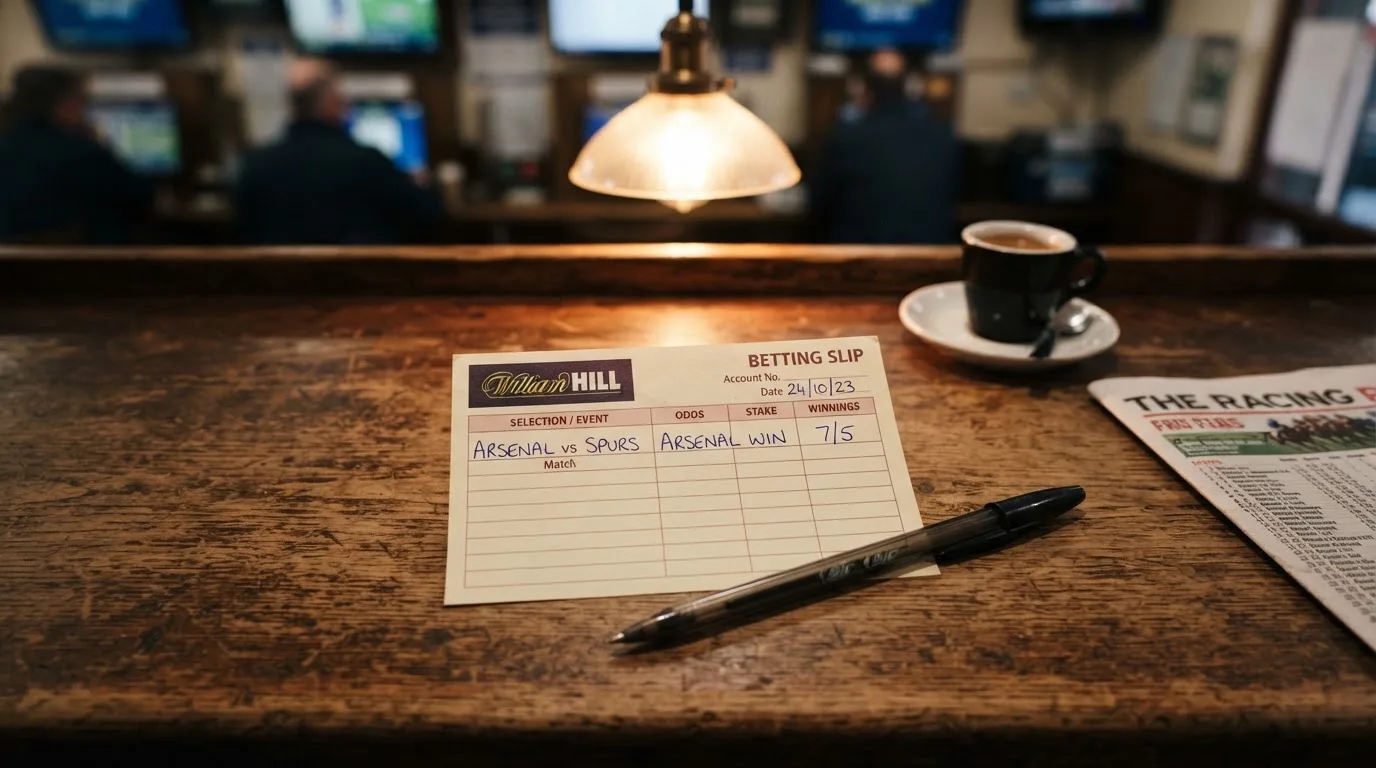
What goes into a probability the punter can defend is a longer list than it looks. Recent form — wins and losses in the last few events, but also the surface those events were on, because hard-court form does not always translate to grass. Head-to-head record, with the caveat that the older meetings matter less than the most recent and that a head-to-head record on clay between two clay specialists is a much stronger signal than the same record on a hard court. Minutes on court in the previous round, because a five-set match on Tuesday changes the legs available on Friday. Injury news — a wrap on a wrist, a taped ankle, a withdrawal from a doubles event in the same week — that the bookmaker has priced in less than the punter has read. Conditions on the day — indoor or outdoor, day or night, the wind — that shift the break probability on serve. The bookmaker has a model for most of this; the punter’s edge, where one exists, is in the parts the model has weighted wrong or in a piece of news the model has not yet priced in. The edge is rarely large and almost never lasts.
That last sentence is the reason no tip sheet beats the closing line over a season. The bookmaker’s model updates with the news; the tipster’s model is the news of the day it was written; the punter who acts on a tip the day after it was published is acting on stale information at a price the market has already moved. A tip service that promises a long-run edge is selling confidence, not accuracy; the punter who wants a long-run edge builds it themselves from form, surface and conditions, with a stake sized to a bankroll the punter can afford to lose.
Bet types, markets and the odds a punter reads
Tennis markets split into three families. Match-winner markets are the largest and most liquid: a two-way bet on who wins the match, sometimes a three-way with a retirement rule priced in, occasionally a two-way market that voids on a walkover. Set betting markets name the exact score — 2-0 or 2-1 in a best-of-three, 3-0, 3-1 or 3-2 in a men’s Grand Slam — and pay more for the longer scores because the bookmaker’s model gives them less chance. Game handicap markets give one player a head start of games or sets; an Asian handicap on games (-3.5, +3.5) is the closest the tennis market gets to a two-way price without a push, and is useful for matches where one player is a clear favourite but not a dominant one. Over/under markets run on total games, total sets and sometimes the number of tiebreaks; a men’s best-of-five match at a Grand Slam averages more games than a women’s best-of-three at the same event, and the price on the over reflects it.
Accumulators multiply the prices into one. A double at decimal odds 1.80 and 2.20 is a 3.96 accumulator; the punter’s stake wins £396 on a £100 stake if both legs win, and loses £100 if either does. The compounding margin is the catch — each leg carries its own margin, and the bookmaker’s margin compounds across the legs, so a five-fold of tennis match-winners with a 5% margin per leg carries roughly a 23% margin in the headline price. The punter chasing an accumulator insurance promotion is paying that compounded margin and getting a free-bet refund if one selection loses; the expected value of the refund at the kind of prices accumulators run at is small against the compounded margin the punter is paying.
Each-way betting, common in horse racing, is offered on some tennis outright markets — to win the tournament — at fractional place terms. An each-way bet is two bets of equal stake: a win bet on the player to win the tournament and a place bet on the player to reach a stated round, with the place paying a fraction (typically 1/2 or 1/4) of the win odds. The punter’s stake doubles; the punter’s risk halves if the player reaches the place round but not the win. Outright markets are tight for a reason — the bookmaker’s model on a tournament draw is rarely beaten by a punter’s model that has not seen the draw — and most punters do better on match-by-match markets than on outrights.
How the margin sits inside the odds
A bookmaker’s margin is the cut it keeps on every market, and it sits inside the price the punter sees. Take a two-way market — a match-winner — at decimal odds 1.90 and 1.90 (the same price on both players, as the prescribed calculation below uses). The implied probability on each side is 1 ÷ 1.90 = 0.5263, or 52.63%, and the two sides add to 105.26% rather than 100%; the 5.26 percentage points above 100% is the bookmaker’s margin, the cut the bookmaker keeps of every unit wagered on this market before the event is decided. The opposite reading is the payout share — the proportion of every unit wagered that the bookmaker returns to winning punters in the long run — which here is 100 ÷ 105.26 ≈ 95.00%. Margin and payout share are the same market seen from two sides; a 5% margin is a 95% payout share, and a punter who hears a bookmaker advertise a 95% payout share is hearing the same number called a 5% margin in the rest of the industry.
The 5.26% margin on an evenly priced two-way market is in the typical band for a tennis match-winner at a major tournament — somewhere between 4.5% and 6.5% depending on the bookmaker, the event and how close to off the price was published. The same bookmaker’s margin on a set-correct-score market on the same match is usually wider — 7-10% — because the model has fewer data points and the bookmaker charges for the uncertainty. The same bookmaker’s margin on an over/under total games market is usually tighter than the match-winner market because the over and under pool more liquidity. The punter who reads only the headline price is reading the bookmaker’s marketing; the punter who reads the margin across the markets they bet on is reading the cost of those bets.
The prescribed calculation for this page is the margin of an illustrative two-way market at decimal odds 1.90 / 1.90 (fractional 9/10). The implied probability on each side is 1 ÷ 1.90 = 0.5263, the two sides add to 1.0526 and the bookmaker’s margin is 1.0526 − 1.00 = 0.0526, or 5.26%. The corresponding payout share — the share of every unit wagered that returns to winning punters in the long run — is 1 ÷ 1.0526 ≈ 0.9500, or 95.00%. The margin is the same number from the bookmaker’s side and the payout share is the same number from the punter’s side; the punter is paying roughly five pence in the pound on every unit wagered before the match is decided, and the band this sits in — 4.5-6.5% for a tight tennis match-winner at a major — is the band the punter benchmarks every other match-winner market against.
Tennis at the reviewed bookmakers
A short review of each operator below, naming the licence, the product shape the operator publishes and the kind of punter the operator’s offer seems written for. No operator is “the best” — the choice depends on what the punter values, and the verdict at the end of each block names the punter the operator suits rather than the punter the operator beats.
BetVictor
BetVictor holds Gambling Commission remote licence 39576 as BV Gaming Limited and operates the BetVictor sportsbook. The brand’s standout feature is Best Odds Guaranteed on UK and Irish horse racing, with Smart Stats for form study and BetFinder for finding racing bets — a horse-racing-led product, with tennis carried in the standard sportsbook. The punter who bets mostly on tennis and treats racing as an occasional sideline will find a tidy match-winner market and a competent in-play product, but will not see the racing promotions the brand spends its marketing on. The punter who splits time roughly evenly between tennis and UK/Irish racing gets the best of it, because Best Odds Guaranteed is a long-run value on racing the tennis-focused punter will not use.
Dabble
Dabble holds Gambling Commission remote licence 65677 as Dabble Sports UK Ltd and operates the Dabble site. The welcome offer is “Bet £10, Get £10 in Free Bets” on a first deposit for new customers, with minimum odds applying, a 7-day expiry and the stake not returned — a modest welcome by industry standards, with the small print the punter reads once at sign-up and probably forgets. The product behind the welcome is a modern sportsbook with a social feed, peer-betting features and a thin but competent tennis offering. The punter who wants a clean sign-up, a small welcome and a sportsbook with a fresh layout will like Dabble; the punter who wants the deepest tennis market or the widest streaming library will not.
bet365
bet365 holds Gambling Commission remote licence 55148 as Hillside (UK Sports) ENC and operates the bet365 site. The in-play product is the brand’s reputation: Bet Track and Match Live are the dedicated tracking features, live streaming covers a wide event list and the in-play tennis market is among the deepest in the UK. The punter who lives on the in-play page and values a live stream on the same screen as the betting slip is the punter bet365 is written for; the punter who bets once a week on a futures market will pay for features they do not use. The welcome offer at the time of writing was not a headline promotion, and the punter who picks a bookmaker by the welcome bonus should look elsewhere.
Betway
Betway holds Gambling Commission remote licence 39372 as Betway Limited and operates the Betway site. The current welcome offer for new UK and Ireland customers is £40 in free bet tokens (4 x £10) credited on settlement of a first bet of at least £10 at minimum odds of 2.0, with a 7-day expiry and debit-card deposits only — a token-led welcome that pays out in four bites rather than one. The product behind it is a wide sportsbook with a competent tennis offering and a casino tab the punter can ignore. The punter who values a four-token welcome over a single bonus, and who is happy to deposit with a debit card, gets a tidy sign-up; the punter who wants to deposit by bank transfer or e-wallet will not qualify for the welcome.
10bet
10bet holds Gambling Commission remote licence 43173 as Blue Star Planet Limited and operates the 10bet site. The sportsbook covers football, tennis and horse racing with Cash out, Bet Builder and Live Streaming — a feature set that puts the brand in the same bracket as the larger operators on the live page, with a smaller marketing budget. The punter who wants the live features of the bigger brands at a quieter cashier will like 10bet; the punter who values the brand recognition of the big four will not.
BetGoodwin
BetGoodwin holds Gambling Commission remote licence 2927 as Goodwin Racing Limited and operates the BetGoodwin site. The standout feature is Best Odds Guaranteed on all UK and Irish horse and greyhound racing up to £1,000 — a higher cap than most of the racing-led brands, and a clean signal that the product is racing-first. Tennis sits in the sportsbook under the racing skin, and the punter who bets mostly on tennis will not see the racing promotions the brand spends its marketing on. The punter who bets a meaningful stake on UK/Irish racing and wants a £1,000 cap on Best Odds Guaranteed is the punter BetGoodwin is built for.
Octobet
Octobet holds Gambling Commission remote licence 62545 as Octopus Game Limited and operates the Octobet site. The brand’s standout is Best Odds Guaranteed on UK and Irish horse racing up to £150 per customer per race — a per-race cap rather than a daily or weekly cap, which matters to a punter who has a single big bet on a single race and wants to know the ceiling on the payout. Tennis is a smaller part of the offering. The punter who bets big singles on UK/Irish racing gets a useful tool; the punter who bets accumulators across a meeting will not see the cap work the same way.
Paddy Power
Paddy Power holds Gambling Commission remote licence 39439 as PPB Counterparty Services Limited and operates the Paddy Power site. The app’s standout is the Bet Builder+ product, the Super Sub feature that rolls a bet over to the replacement if a selected player is substituted, and the expanded Win More markets. Super Sub is a tennis-friendly feature because retirements and substitutions are more frequent in tennis than in most team sports, and the punter who bets player-prop markets on Grand Slam matches gets a meaningful edge from it. The punter who bets mostly match-winner markets will not see Super Sub work for them, and the welcome offer is not the headline of the brand.
VBet
VBet holds Gambling Commission remote licence 44662 as SCGO Limited and operates the VBet site. The product is Bet Builder, pre-match and in-play betting, live streaming and a live calendar with results and stats — a feature set built around the live page. The brand runs a thinner marketing budget than the bigger operators and a more focused live product. The punter who bets on smaller tennis events and wants a live calendar to plan a week of in-play bets will like VBet; the punter who bets only the majors will see the calendar as overhead.
Betfred
Betfred holds Gambling Commission remote licence 39544 as Petfre (Gibraltar) Limited and operates the Betfred site. The app’s feature set is Bet Builder, Sub Switch, Racing Post data and Extra Places — a mix of tennis and racing tools, with Extra Places a racing-specific feature that pays out on extra finishing positions in selected races. The punter who bets tennis match-winners and the occasional horse race gets a useful app; the punter who bets only tennis will not see the racing features work for them.
Tennis tournaments the punter will meet at the betting slip
Four tournaments carry most of the betting volume in tennis and most of the price-discovery work, and a fifth tier of week-to-week ATP and WTA events fills the calendar underneath. The four Grand Slams — Australian Open (hard courts, January), French Open (red clay, late May and early June), Wimbledon (grass, late June and early July) and US Open (hard courts, late August and early September) — anchor the year. Wimbledon 2026 ran from 29 June to 12 July 2026, with Jannik Sinner beating Alexander Zverev in the men’s final and Linda Noskova beating Karolina Muchova in the women’s final; the Australian Open, Roland-Garros and the US Open are the other three corners of the calendar.
Underneath the Slams, the ATP Masters 1000 (nine events across the year, with Indian Wells, Miami, Monte Carlo, Madrid, Rome, Canada, Cincinnati, Shanghai and Paris-Bercy) and the WTA 1000 events are the next tier; the WTA Finals and ATP Finals close the season in November for the top eight players in each tour. The Davis Cup (men) and Billie Jean King Cup (women) are the international team competitions, played in a group-and-knockout format and treated by the bookmakers as a series of singles matches for betting purposes. The Hopman Cup, the United Cup and the ATP Cup are mixed or team events that bookmakers price on a per-match basis.
The week-to-week ATP 250 and ATP 500 events, and the WTA 250, WTA 500 and WTA 1000 events, fill the calendar outside the Slams and the Masters. Liquidity is thinner at the smaller events and the bookmaker’s margin is usually a little wider; the punter who bets on a 250-level event is paying a higher fee per unit wagered than the punter who bets on a Masters event on the same match-winner market shape.
A staking and bankroll discipline
The most useful thing the punter can do with a tip is size the stake. A bankroll is the money the punter has put aside to lose — a sum the punter would not miss if it were gone tomorrow — and a unit is a fraction of that bankroll, usually 1-3%, that the punter wagers on any single bet. The punter who wagers 5% of the bankroll on a confident pick and 1% on a marginal one is managing variance; the punter who wagers 10% on a confident pick and 0.5% on a marginal one is gambling, not betting.
The flat-staking punter wagers the same unit on every bet and lets the bankroll grow and shrink on the merits of the picks. The proportional punter wagers a fixed percentage of the current bankroll on every bet, so a winning streak compounds and a losing streak throttles. The Kelly punter wagers a percentage of the bankroll scaled to the perceived edge, which is mathematically optimal but punishes the punter who overestimates the edge; a half-Kelly or quarter-Kelly is the typical compromise. None of these systems beat a negative edge, and the punter whose picks do not have value will lose money at any staking plan. The staking plan distributes the variance; it does not create the edge.
A betting record — every bet, the stake, the price, the result, the closing price — is the punter’s audit trail. A punter who keeps a record for three months can see whether the picks have edge; a punter who does not keep a record cannot. The punter who closes the laptop after a losing weekend and never opens the record is the punter who tips a quiet sum into the bookmaker’s margin every week and wonders why the bankroll is shrinking.
A short reading of the table
The table at the top of the page is the entry point and the reviewed operators are the same data points at full length. The licence column is the column that does the most work: every operator is on the Gambling Commission’s public register, every operator takes part in GAMSTOP and every operator is bound by the 10x bonus cap. The “what the operator’s terms state” column is a snapshot of one feature — not the brand’s whole product, not its welcome offer in full — and the punter who wants the wider picture reads the brand’s own terms before placing anything. The table’s race-and-tennis split is honest: two of the ten brands are racing-led (BetGoodwin, Octobet) and one is racing-and-tennis balanced (BetVictor, with a Best Odds Guaranteed on racing the tennis punter will not use). The punter who reads the table as a ranking will pick the wrong bookmaker; the punter who reads it as a map will pick the right one for the punter they are.
The closing position
The punter who walks away with a healthy bankroll a year from now is the punter who built an edge over hundreds of bets, sized the stake to the bankroll, used the licensed operators’ safer-gambling tools as a guardrail rather than a decoration, and treated every promotion as a margin to grind through rather than a stake to withdraw. The punter who walks away with a smaller one is the punter who chased the welcome offer, treated in-play as a profit centre, did not keep a betting record and let a bad week turn into a bad month. Tennis is a better sport to bet on than most because the scoring is regular, the calendar is dense and the bookmakers’ models are tested in public; it is a worse sport to bet on than most because the margin compounds across an accumulator, the in-play price moves faster than a model can keep up, and the “free bet” rarely is. The choice between the bookmakers above is the smaller decision; the bigger one is the discipline the punter brings to it.
Frequently asked questions
How does tennis betting work?
A tennis bet is a contract with a bookmaker on the outcome of a match, a set, a game or a market derived from them. The bookmaker publishes a price in decimal odds (3.50 means £3.50 returned for every £1 staked, including the stake) or fractional odds (5/2 means £5 profit for every £2 staked). If the outcome lands, the punter is paid at the published price; if it does not, the punter loses the stake. The price the bookmaker publishes carries the bookmaker’s margin, which is why the implied probabilities on a two-way market add to more than 100%.
How to bet on tennis in practice?
Pick a match on a GB-licensed bookmaker’s tennis page, choose a market (match-winner, set betting, over/under games, handicap), enter the stake on the betting slip and confirm. The bookmaker settles the bet after the match is decided under its own rules; a retirement mid-match usually voids the bet or settles on the player who progresses, depending on the market and the operator. Settled bets appear in the bet history, withdrawals go back through the cashier by the same payment method the punter deposited with, and the punter sets a deposit limit at sign-up that the punter can lower but not raise without cooling off.
What is a value bet and why is no tip ever certain?
A value bet is a bet whose price implies a lower probability of the outcome than the punter’s own estimate. If the punter’s model gives a player a 60% chance of winning and the bookmaker is paying decimal odds 1.90 (which implies 52.6%), the difference is the value. No tip is certain because the punter’s model is a model — built on form, surface, head-to-heads and conditions — and the bookmaker’s model is also a model, with more data and faster updates. The punter who claims a certain pick is selling confidence; the punter who claims a long-run edge and shows the record is doing something different.
What is the bookmaker’s margin and how can it be seen in the odds?
The bookmaker’s margin is the cut the bookmaker keeps on every market, and it sits inside the implied probabilities of the prices published. On a two-way market at decimal odds 1.90 / 1.90 the implied probabilities are 52.63% and 52.63%, adding to 105.26% rather than 100%; the 5.26 percentage points above 100% is the margin. The corresponding payout share — what the bookmaker returns to winning punters of every unit wagered in the long run — is 1 ÷ 1.0526 ≈ 95.00%. A punter who reads the margin across markets benchmarks the cost of each bet; a punter who reads only the headline price reads the bookmaker’s marketing.
How is the return on a bet worked out from the stake and the odds?
The return on a winning single bet is stake × decimal odds — a £10 stake at decimal odds 2.50 returns £25, of which £15 is profit and £10 is the stake returned. A combination bet multiplies the legs into one price; a double of decimal odds 1.80 and 2.20 is a 3.96 accumulator, and a £10 stake returns £39.60 of which £29.60 is profit. A free bet does not return the stake with a win; a £10 free bet at decimal odds 2.50 returns £25 of profit only, because the stake is not paid back. Each-way betting doubles the stake into a win bet and a place bet at fractional place odds; outright market place terms vary by tournament and by operator.
US & other team sports – tenniscourttips.com
Content created by the «tenniscourttips.com» team
